
16:8 Intermittent Fasting Results: What to Expect in 30, 60, and 90 Days
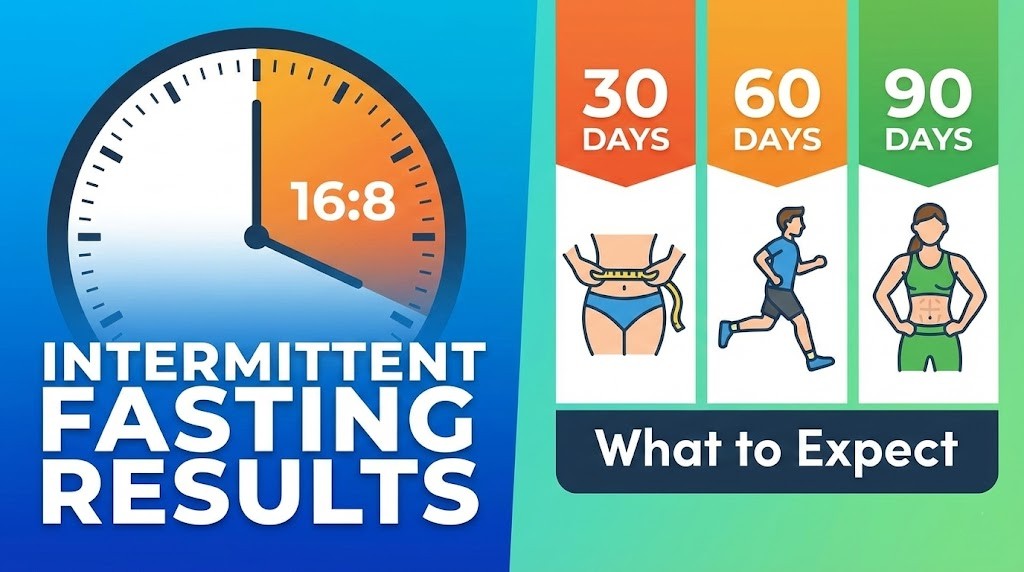
If you’re looking for real 16:8 fasting results, you’re probably wondering what actually happens—not just what could happen under perfect conditions. This analysis reviews peer-reviewed studies that tracked participants for at least 4 weeks using DEXA scans and similar gold-standard body-composition imaging to measure real outcomes, not scale fluctuations.
You’ll see average 16:8 fasting results across multiple trials, week-by-week changes most people experience, and the factors that determine whether your first month looks closer to modest improvement or measurable transformation.

What This Article Covers (and Skips)
This is a results-focused analysis. You’ll find data-backed outcome ranges, realistic timelines, and practical factors that influence your personal results.
What you’ll learn:
- Average weight, fat, and muscle changes in 30-90 days from published IF trials
- Week-by-week physiological adjustments most people experience
- Who tends to see faster or slower results based on starting composition and lifestyle factors
What this skips:
- How intermittent fasting works mechanistically (that’s covered in broader IF guides)
- Meal planning or recipe recommendations
- Detailed metabolic theory
If you need a comprehensive IF education, look for foundational fasting protocols first. This article answers one question: what measurable changes can you reasonably expect, and when?
Average 16:8 Fasting Results: 30-Day Clinical Data
Researchers tracked hundreds of participants following 16:8 protocols for at least one month. Here’s what the aggregated data shows:
| Metric (30 Days) | Average Change | Study Range |
|---|---|---|
| Total weight | −4.0 lbs (−1.8 kg) | −3 to −11 lbs across 27 trials |
| Fat mass | −3.1 lbs (−1.4 kg) | −2 to −5 lbs in 4-8 week studies |
| Visceral fat | −6% reduction | −4% to −8% in controlled trials |
| Lean mass | −0.4 lbs (−0.2 kg) | 0 to −0.7 lbs average |
| Metabolic rate | −0.7% | 0% to −3% depending on protein intake |
Roughly 70-80% of weight lost comes from fat when protein intake stays at 1.2-1.6 grams per kilogram of body weight and resistance training continues at least twice weekly.
The visceral fat reduction matters more than the scale number. Visceral fat—the metabolically active tissue surrounding organs—correlates directly with insulin resistance, cardiovascular risk, and inflammatory markers. A 6% reduction in one month represents clinically meaningful metabolic improvement.
Quick Summary
- Most people lose 3-4 pounds in the first month, primarily from fat
- Visceral fat drops faster than subcutaneous fat when fasting is consistent
- Muscle loss stays minimal (under half a pound) with adequate protein and strength work
Week-by-Week: What Actually Happens
Week 1: Water Weight and Glycogen Depletion
The first 1-3 pounds drop quickly—but it’s not fat yet. Fasting depletes liver glycogen stores, and each gram of glycogen binds 3-4 grams of water. When glycogen empties, that water leaves.
Common experiences: mild headaches (from sodium flushing), increased hunger around your usual eating times, and afternoon energy dips. These typically resolve within 5-7 days as your body adjusts insulin and cortisol rhythms.
Week 2: Appetite Regulation Resets
Ghrelin—your primary hunger hormone—adapts to your new eating schedule within about 14 days. Hunger becomes predictable rather than constant. Most people report hunger waves that peak and pass rather than building continuously.
Typical additional weight change: 0.5-1 pound, mostly fat this time.
Week 3: Metabolic Flexibility Begins
Your body starts switching between glucose and fat oxidation more efficiently. Some people notice sharper mental clarity, likely from low-level ketone production during the fasting window. Studies using respiratory exchange ratio measurements confirm this shift occurs around week 3 for most participants.
Visceral fat reduction may accelerate during this phase while subcutaneous fat loss continues at a steadier pace.
Week 4: Visible Changes Emerge
Waist circumference typically decreases by 0.5-0.8 inches. Clothes fit differently even if the scale hasn’t moved dramatically. DEXA scans taken at week 4 usually show body recomposition—fat down, muscle stable or slightly up in people maintaining resistance training.
In Short
- Week 1 involves water shifts, not fat loss
- Hunger regulation normalizes by week 2
- Metabolic adaptation becomes measurable by week 3
- Visual changes usually appear in week 4
What Influences Your 16:8 Fasting Results
Not everyone loses 4 pounds in month one. Here’s what creates the 3-11 pound range seen across studies:
Starting body composition: People with higher body fat percentages tend to lose pounds faster initially. Someone at 35% body fat may lose 6-8 pounds in month one, while someone at 22% might lose 2-3 pounds—but the percentage of body weight lost often stays similar.
Calorie quality within the eating window: Whole foods with high satiety (protein, fiber, water content) produce better outcomes than processed foods with the same calorie count. The fasting window doesn’t override energy balance, but it does make overconsumption less likely.
Movement and training stimulus: Daily steps and 2-3 resistance sessions per week preserve muscle mass and increase total energy expenditure. Sedentary fasting produces slower, less favorable body composition changes.
Sleep and stress management: Poor sleep elevates cortisol and blunts fat oxidation even during fasting periods. Seven to nine hours of consistent sleep amplifies results measurably.
In Short
- Higher starting body fat correlates with faster initial pound loss
- Food quality and training determine whether you lose fat or a mix of fat and muscle
- Sleep quality directly affects fat oxidation rates
Best For (Who Typically Sees Strong Results)
16:8 fasting tends to produce the best measurable outcomes in:
- People who struggle with evening snacking or grazing: The defined eating window eliminates late-night calorie accumulation without requiring constant decision-making
- Individuals with moderate to high body fat (25%+ for men, 32%+ for women): Greater fat stores provide more substrate for oxidation during fasting periods
- Those with consistent daily schedules: Predictable eating windows are easier to maintain when work and sleep times stay stable
- People who can maintain protein intake: If you can hit 100+ grams of protein daily within 8 hours, muscle preservation becomes straightforward
Not Recommended For
Certain groups see poor adherence or suboptimal results with 16:8 protocols:
- Shift workers or people with erratic schedules: Inconsistent eating windows reduce metabolic adaptation benefits
- Individuals with histories of disordered eating: Rigid eating windows can trigger restriction-binge cycles in susceptible people
- Anyone on medications requiring food at specific times: Fasting windows may conflict with pharmaceutical timing requirements
- Pregnant or breastfeeding women: Nutrient timing and availability matter more than fasting during these periods
Consult a healthcare provider before starting if you have diabetes, take blood sugar medications, or have a history of eating disorders.
Realistic Limitations and Common Plateaus
✔️ Pros
- Reduces decision fatigue around meals and snacking
- Produces measurable visceral fat reduction within 4 weeks
- Doesn’t require calorie counting or food restriction within the eating window
- Compatible with most dietary preferences (keto, vegetarian, etc.)
⚠️ Cons
- First week involves uncomfortable hunger adaptation for most people
- Social events and family meals may conflict with your eating window
- Muscle preservation requires deliberate protein planning
- Results plateau after 8-12 weeks without progressive training or calorie adjustment
💡 Expert Diet Tip
Schedule your eating window around your most important social or family meal. If dinner is sacred, make that the anchor of your 8-hour window. Fasting works when it fits your life, not when your life contorts to fit fasting.
Weight loss stalls usually happen when one of three things occurs: calorie intake creeps up within the eating window, protein drops below maintenance needs, or training stimulus disappears. A mid-program DEXA scan or detailed food log typically reveals the cause.
What This Means
- 16:8 works best when aligned with your existing schedule and priorities
- Plateaus are normal and usually fixable with minor adjustments to protein or movement
- Long-term success requires progressive overload in training, not just consistent fasting
Using This Data to Make Your Decision
If you’re evaluating whether to try 16:8 fasting, here’s how to interpret these results:
Expect modest, measurable changes in month one—around 3-5 pounds for most people, with 70-80% coming from fat if you maintain protein and training. If someone is promising 15-20 pound transformations in 30 days, they’re either working with people who have significant weight to lose or they’re exaggerating.
The visceral fat reduction matters more than the scale number for long-term health. A 6% drop in dangerous organ fat represents meaningful metabolic improvement even if total weight loss seems modest.
Month two and three build on month one—but require progressive adjustments. If you eat the same foods and do the same workouts, adaptation will slow results. Sustainable progress requires small, deliberate increases in training difficulty or protein intake.
This approach works best for people who want structure without complexity. If you need maximum flexibility or you have medical conditions requiring frequent eating, explore other eating patterns first.

Frequently Asked Questions
Does 16:8 fasting cause significant muscle loss?
Most studies show minimal lean mass reduction (under half a pound in 4 weeks) when protein stays at 1.2-1.6 grams per kilogram of body weight and resistance training continues at least twice weekly. The muscle loss risk increases if you drop protein below 0.8 g/kg or eliminate strength training entirely.
What happens if I break my fast with high-sugar foods?
Breaking your fast with refined carbohydrates and sugar spikes insulin rapidly, which can trigger rebound hunger and reduce the metabolic benefits of the fasting period. Starting your eating window with protein and fiber produces more stable blood sugar and better satiety throughout the remaining hours.
Can I expect the same results in months 2 and 3?
Results typically continue but at a slower rate. Month two might produce 2-3 pounds of additional fat loss, month three slightly less. This is normal metabolic adaptation, not failure. Adjusting training intensity, increasing protein slightly, or refining food quality within your window maintains progress without extreme measures.