
Intermittent Fasting for Beginners: The Complete 2026 Starter Guide

Intermittent fasting isn’t new, but the confusion around it certainly is. This intermittent fasting beginners guide cuts through the noise.
If you’ve read conflicting advice about when to eat, what breaks a fast, or whether skipping breakfast will destroy your metabolism, you’re not alone. Most beginner guides either oversell the benefits or bury you in academic jargon about autophagy without explaining what you actually need to do on Tuesday morning.
This guide takes a different approach. You’ll learn how intermittent fasting works at a biological level, which eating schedules make sense for real life, and — critically — who should avoid this approach entirely. No transformation promises. No miracle framing. Just practical information so you can decide if fasting fits your goals and constraints.
Intermittent fasting is a structured eating pattern, not a diet. It doesn’t tell you what to eat — it controls when you eat. For some people, that timing shift improves fat metabolism, reduces decision fatigue around food, and simplifies calorie control without obsessive tracking. For others, it triggers binge patterns, disrupts hormones, or simply doesn’t align with their work schedule or family life.
Both outcomes are normal.
This guide will help you determine which category you’re likely to fall into before you commit weeks to an approach that may not suit your biology or lifestyle.

Intermittent Fasting Beginners Guide: How It Actually Works
Intermittent fasting restricts your daily or weekly eating to specific time windows. During fasting periods, you consume zero-calorie or near-zero-calorie beverages — water, black coffee, plain tea, sparkling water. During eating windows, you eat normally.
The primary metabolic effect is this: when you stop eating for extended periods, insulin levels drop. Lower insulin allows your body to access stored fat for energy more readily than it would in a constant fed state. After roughly 12 hours without food, liver glycogen (stored glucose) begins depleting. Beyond that point, fat oxidation increases as your body shifts fuel sources.
This isn’t starvation. It’s a controlled metabolic state your body evolved to handle. Humans historically went long stretches without food — not by choice, but by necessity. Modern eating patterns (constant snacking, late-night meals) keep insulin elevated almost continuously, which can reduce metabolic flexibility over time.
Intermittent fasting essentially reintroduces that flexibility.
There are additional proposed benefits beyond fat metabolism — improved cellular cleanup processes, reduced inflammation markers, better blood sugar regulation — but these effects vary widely by individual and aren’t guaranteed. The core mechanism is simpler: you create a consistent calorie deficit or maintain energy balance more easily because you have fewer hours to eat.
What This Means
- Fasting works primarily by controlling insulin and extending fat-burning periods
- The metabolic shift begins around 12-14 hours without food for most people
- This is not starvation — it’s structured meal timing using normal biological processes
- Additional benefits beyond fat loss are possible but individual-specific
The Most Common Intermittent Fasting Schedules for Beginners
Different fasting protocols suit different schedules, preferences, and metabolic responses. Here are the main approaches beginners typically consider:
12:12 Method
Fast for 12 hours, eat during a 12-hour window. Example: stop eating at 8 PM, resume at 8 AM.
This is the gentlest entry point. Many people already do this naturally if they avoid late-night snacking. The metabolic effects are mild but real — you’re still allowing insulin to drop overnight and encouraging some fat oxidation. This method works well if you’re testing whether fasting feels manageable before committing to stricter windows.
14:10 Method
Fast for 14 hours, eat during a 10-hour window. Example: finish dinner by 7 PM, start eating at 9 AM.
Slightly more metabolically active than 12:12. You extend the fasting period by two hours, usually by delaying breakfast. For people who aren’t particularly hungry first thing in the morning, this feels almost effortless. For those who wake up ravenous, it can feel restrictive.
16:8 Method
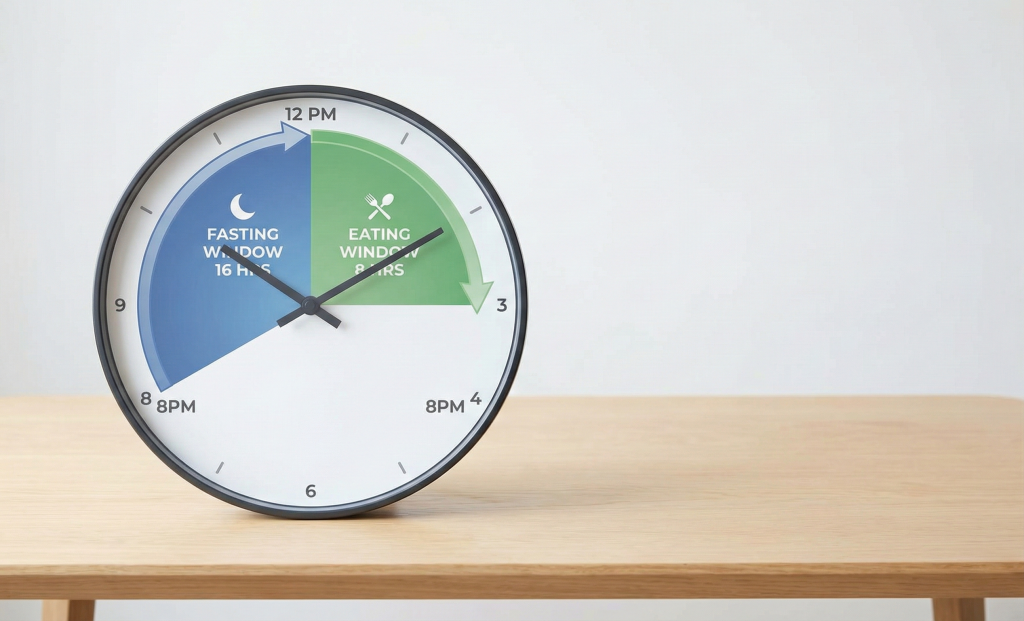
Fast for 16 hours, eat during an 8-hour window. Example: eat between 12 PM and 8 PM.
This is the most popular protocol for a reason — it’s long enough to produce measurable fat-burning effects but short enough to fit most work and social schedules. You’re essentially skipping breakfast (or dinner, depending on preference) and consolidating meals into an 8-hour block. For many people, this becomes sustainable long-term because it simplifies decisions and reduces total eating occasions.
5:2 Method
Eat normally five days per week. On two non-consecutive days, restrict calories to roughly 500-600. Example: eat normally Monday through Friday, fast (or severely restrict) on Tuesday and Thursday.
This weekly approach appeals to people who dislike daily restrictions. The downside: fasting days can feel difficult, and some people compensate by overeating on non-fasting days, which neutralizes the calorie deficit. It also requires more planning and discipline on specific days rather than building a daily routine.
Alternate-Day Fasting
Alternate between regular eating days and fasting (or very low-calorie) days. Example: eat normally Monday, fast or restrict severely on Tuesday, eat normally Wednesday, and so on.
This is more aggressive and generally not recommended for beginners. Compliance tends to be poor, and the psychological strain of frequent deprivation can backfire into binge cycles. Some research supports metabolic benefits, but the behavioral cost often outweighs them for most people.
In Short
- 12:12 is the easiest starting point with mild effects
- 16:8 offers the best balance of metabolic benefit and real-life sustainability
- Weekly fasting methods (5:2, alternate-day) require more discipline and often suit experienced fasters better
- Choose based on your natural hunger patterns and schedule, not just promised results
How Intermittent Fasting Affects Weight Loss (Real Mechanisms)
Weight loss from intermittent fasting happens through several interconnected pathways, not a single magic mechanism.
First, calorie restriction. When you compress eating into fewer hours, most people naturally consume fewer total calories. Not because fasting “boosts metabolism” — it doesn’t, at least not dramatically — but because you have less time to eat. Three meals in 8 hours usually totals less food than the same meals spread over 14-16 waking hours with snacks in between.
Second, improved insulin sensitivity. Frequent eating keeps insulin elevated. Prolonged fasting periods allow insulin to drop and stay low, which improves your cells’ responsiveness to insulin over time. Better insulin sensitivity means your body handles carbohydrates more efficiently and stores less fat from the same food intake.
Third, increased fat oxidation. After glycogen depletion (typically 12+ hours fasted), your body shifts toward burning fat for fuel. This doesn’t mean you lose more fat overall if calories are equal — it just means you’re using fat as fuel during fasted periods. Total fat loss still depends on energy balance over days and weeks, not hours.
Fourth, behavioral simplification. Fasting removes decisions. You don’t negotiate with yourself about mid-morning snacks or late-night eating because those times are simply off-limits. For people who struggle with constant food decisions or emotional eating triggers throughout the day, this structure can be remarkably effective.
What intermittent fasting does not do: it doesn’t override thermodynamics. If you eat more calories during your eating window than you burn throughout the day, you won’t lose weight. Some people actually gain weight on intermittent fasting by overeating during shortened windows, treating it as permission to binge.
Research from the New England Journal of Medicine notes that intermittent fasting produces comparable weight loss to traditional calorie restriction when calories are controlled — roughly 3-8% body weight over 8-24 weeks in overweight adults. The advantage isn’t magical fat burning. It’s adherence. Some people find fasting easier to sustain than daily calorie counting.
Key Takeaways
- Weight loss primarily comes from eating fewer total calories in compressed time windows
- Insulin improvement and fat oxidation contribute but don’t override energy balance
- Behavioral simplification often matters more than metabolic changes for long-term success
- Fasting isn’t superior to other calorie control methods — it’s just differently structured

Best For (Who Intermittent Fasting Makes Sense For)
Intermittent fasting isn’t universally appropriate. It works best for specific people in specific situations:
Adults who naturally skip breakfast or aren’t hungry in the morning. If you’ve never been a breakfast person, 16:8 fasting formalizes what you already do. You’re not fighting your natural appetite rhythms.
People who struggle with portion control or constant snacking. The time boundary removes ambiguity. You’re either in your eating window or you’re not. There’s no negotiation about “just one more bite” at 9 PM.
Individuals seeking metabolic health improvements alongside weight management. If you have prediabetes, insulin resistance, or elevated fasting glucose, intermittent fasting’s insulin-lowering effects may help. Research published by the American Diabetes Association shows fasting protocols can improve glycemic control in some patients, though individual responses vary.
Busy professionals who want fewer meal decisions. Fasting simplifies daily routine. You’re not packing mid-morning snacks, you’re not planning five small meals. For people with demanding schedules, this reduction in food-related decisions is genuinely valuable.
People who’ve tried traditional diets and found daily calorie tracking exhausting. Fasting offers structure without meticulous logging. You still need to eat reasonably during your window, but you’re not weighing portions or entering data into apps multiple times per day.
Individuals comfortable with hunger and not prone to binge eating. If you can experience hunger without panic or compensatory overeating later, fasting becomes manageable. If hunger triggers intense anxiety or loss of control around food, this approach may backfire.
💡 Expert Diet Tip
Start with the easiest protocol you can sustain for 30 days, not the most aggressive one that promises fastest results. Consistency over weeks builds metabolic adaptation and habit formation. Jumping straight to 20:4 fasting or alternate-day protocols often leads to early burnout and rebound eating.
Who Should Avoid Intermittent Fasting (Critical Exclusions)
These populations should not attempt intermittent fasting without explicit medical supervision:
Pregnant or breastfeeding women. Nutritional demands increase significantly during pregnancy and lactation. Fasting can compromise nutrient availability for fetal development or milk production. The American College of Obstetricians and Gynecologists advises against restrictive eating patterns during these periods.
People with a history of eating disorders. Fasting can trigger or worsen disordered eating patterns — binge-restrict cycles, obsessive food rules, psychological distress around meal timing. If you have a history of anorexia, bulimia, binge eating disorder, or orthorexia, fasting often does more harm than good.
Individuals with Type 1 diabetes or those on insulin therapy. Skipping meals while on insulin creates serious hypoglycemia risk. Fasting protocols require careful medication adjustment, which must happen under direct medical guidance. Self-directed fasting in this population is dangerous.
Children and adolescents. Growing bodies have different metabolic needs than adults. Restricting eating windows during developmental years can impair growth, cognitive function, and nutrient sufficiency. There’s no compelling evidence that fasting benefits this age group, and potential risks are significant.
People with very low body weight or those recovering from malnutrition. If you’re already underweight or nutritionally compromised, fasting further restricts intake and can delay recovery. This includes athletes with extremely low body fat or individuals recovering from illness.
Anyone taking medications that require food. Certain drugs (NSAIDs, some antibiotics, diabetes medications) must be taken with food to avoid gastric irritation or dangerous blood sugar drops. If your medication schedule requires regular meals, fasting may not be compatible.
People with a history of fainting, dizziness, or hypoglycemia. If you’ve experienced blood sugar crashes, lightheadedness, or fainting episodes, extended fasting can exacerbate these issues. Some individuals simply don’t tolerate long gaps between meals well, and that’s a legitimate biological difference, not a character flaw.
Intermittent Fasting vs. Other Eating Approaches (Comparison Logic)
How does fasting compare to alternative dietary strategies?
Intermittent Fasting vs. Traditional Calorie Restriction
Both produce weight loss through calorie deficits. The difference is structure. Traditional calorie counting gives you more eating flexibility (you can eat whenever, as long as totals fit) but requires constant tracking. Fasting removes tracking but imposes rigid time boundaries. Neither is superior — choose based on which constraint you find easier to follow.
Intermittent Fasting vs. Ketogenic Diet
Keto restricts what you eat (very low carbohydrate). Fasting restricts when you eat. Some people combine them, but you can do either independently. Keto produces faster initial water weight loss and may suppress appetite more aggressively due to ketone production. Fasting is less restrictive during eating windows but doesn’t necessarily change macronutrient composition. If you hate giving up carbs, fasting may feel more sustainable. If you struggle with time restrictions, keto may fit better.
Intermittent Fasting vs. Mediterranean Diet
The Mediterranean diet is a food-quality approach emphasizing whole grains, fish, olive oil, vegetables, and moderate wine. It doesn’t restrict timing. You can combine Mediterranean eating principles within a fasting window, and many people do. Mediterranean diet research shows strong cardiovascular benefits independent of weight loss. Fasting research focuses more on metabolic parameters (insulin, glucose). If heart health is your primary concern, Mediterranean eating might take priority. If insulin resistance is central, fasting may offer more direct benefits.
Intermittent Fasting vs. Meal Frequency Strategies (5-6 Small Meals)
Older weight loss advice recommended frequent small meals to “keep metabolism high.” Current evidence doesn’t support this — meal frequency doesn’t significantly affect metabolic rate when calories are equal. Fasting represents the opposite extreme (1-3 larger meals). The advantage of frequent meals: stable energy, no hunger spikes. The advantage of fasting: fewer decisions, potential insulin benefits, simpler routine. Choose based on personal preference and lifestyle, not metabolic mythology.
Quick Summary
- Fasting and calorie counting both create deficits — pick whichever structure you’ll actually follow
- Keto changes food choices; fasting changes meal timing — they solve different problems
- Mediterranean diet prioritizes food quality and can be combined with fasting schedules
- Meal frequency doesn’t matter metabolically — choose based on hunger patterns and convenience
Pros and Cons of Intermittent Fasting (Balanced Assessment)
| ✔️ Advantages | ⚠️ Disadvantages |
|---|---|
| Simplifies meal planning and reduces daily food decisions | Can trigger hunger, irritability, or difficulty concentrating during fasting periods, especially initially |
| May improve insulin sensitivity and blood sugar regulation in insulin-resistant individuals | Not compatible with certain medications, medical conditions, or life stages (pregnancy, breastfeeding, eating disorder history) |
| Requires no special foods, supplements, or expensive meal plans | Social eating situations (breakfast meetings, family dinners) may conflict with fasting windows |
| Allows dietary flexibility during eating windows — no foods are inherently banned | Risk of overeating or binge behavior during eating windows if hunger becomes extreme |
| Research suggests potential benefits for cardiovascular markers and inflammation in some studies | Limited long-term data (beyond 1-2 years) on sustainability and health outcomes in diverse populations |
| Can be combined with other healthy eating patterns (Mediterranean, whole foods, etc.) | May impair athletic performance during fasted training in some individuals, particularly for high-intensity exercise |
Common Mistakes Beginners Make (And How to Avoid Them)
Mistake 1: Starting with the most aggressive protocol
Many beginners jump straight to 20:4 fasting or alternate-day fasting because they want rapid results. This usually backfires within days. Extreme hunger, fatigue, and compensatory binge eating follow. Start with 12:12 or 14:10 for two weeks, then progress if it feels manageable.
Mistake 2: Using fasting as permission to eat anything during eating windows
Fasting doesn’t neutralize poor food choices. If your eating window consists of ultra-processed foods, excessive added sugars, and minimal protein or vegetables, you won’t see health improvements beyond potential calorie reduction. Nutrient quality still matters.
Mistake 3: Ignoring hydration
Beginners often forget that fasting means food restriction, not fluid restriction. Dehydration compounds hunger signals and causes headaches, fatigue, and irritability. Drink water consistently throughout fasting periods. Black coffee and unsweetened tea are fine and may even help with appetite control, but they don’t replace water intake.
Mistake 4: Fasting through intense exercise without adaptation
Training hard while fasted works for some people after weeks of adaptation. Trying it on day three usually results in poor performance, dizziness, or nausea. If you exercise regularly, schedule workouts during or shortly after your eating window until your body adapts. Fasted cardio is optional, not mandatory.
Mistake 5: Expecting linear weight loss every week
Fasting doesn’t override normal weight fluctuation. Water retention, menstrual cycles, stress, and sleep all influence scale weight independent of fat loss. If you’re losing 1-2 pounds per week on average over a month, the protocol is working. Daily or even weekly fluctuations are normal noise, not failure.
Mistake 6: Quitting after one difficult day
The first 3-7 days are typically the hardest. Hunger hormones (ghrelin) spike at your old eating times. Your body hasn’t adapted yet. If you quit on day two because you felt hungry, you never reach the adaptation phase where fasting becomes noticeably easier. Give any new protocol at least two weeks before deciding it doesn’t work for you.
Key Takeaways
- Gradual progression beats aggressive starts for long-term compliance
- Food quality during eating windows determines overall health outcomes
- Hydration and workout timing need deliberate attention during the adaptation phase
- Weight fluctuations are normal — judge success over weeks, not days
What to Eat During Your Eating Window (Practical Guidance)
Intermittent fasting doesn’t prescribe specific foods, but certain choices support better adherence and health outcomes:
Prioritize protein at each meal. Protein promotes satiety more effectively than carbohydrates or fats. If you’re eating two meals in an 8-hour window, aim for 25-40 grams of protein per meal depending on body size and activity level. Greek yogurt, eggs, chicken, fish, legumes, and tofu are all solid options. Research in the American Journal of Clinical Nutrition shows higher protein intake during calorie restriction preserves muscle mass better than lower protein intakes.
Include fibrous vegetables. Vegetables add volume, micronutrients, and fiber without many calories. Fiber slows digestion and stabilizes blood sugar, which helps prevent energy crashes during fasting periods. Leafy greens, cruciferous vegetables (broccoli, cauliflower), peppers, and zucchini are nutrient-dense and low in calories.
Choose whole food carbohydrate sources. If you include carbs (and most people should, unless following keto concurrently), opt for minimally processed options — oats, quinoa, sweet potatoes, brown rice, whole grain bread. These provide sustained energy and better micronutrient profiles than refined grains or sugary foods.
Don’t fear healthy fats. Fats increase satiety and support hormone production. Olive oil, avocados, nuts, seeds, and fatty fish provide essential fatty acids and fat-soluble vitamins. Just remember that fats are calorie-dense (9 calories per gram vs. 4 for protein and carbs), so portions matter if you’re trying to lose weight.
Minimize ultra-processed foods and added sugars. Chips, cookies, sugary drinks, and heavily processed snacks tend to be calorie-dense but not satiating. They spike blood sugar and often trigger cravings shortly after eating. An occasional treat is fine, but basing your eating window on these foods undermines the metabolic and appetite benefits of fasting.
Stay hydrated with zero-calorie beverages during fasting. Water is optimal. Black coffee (no cream, no sugar) and unsweetened tea are acceptable and may even support fat oxidation and appetite suppression. Avoid artificially sweetened drinks during fasting if you notice they increase hunger — some people experience this effect, others don’t.
What This Means
- Protein and fiber are your allies for satiety and muscle preservation
- Whole food choices support stable energy and metabolic health better than processed options
- You can include all macronutrients (protein, carbs, fats) during eating windows
- Hydration during fasting periods requires deliberate attention since you’re not getting water from food
Sample Intermittent Fasting Schedules (16:8 Examples)
Standard 12 PM – 8 PM Eating Window
- 12:00 PM (First meal): Vegetable omelet with avocado and whole grain toast, or Greek yogurt with berries, nuts, and a drizzle of honey
- 3:30 PM (Snack, optional): Apple with almond butter, or a small handful of mixed nuts
- 7:00 PM (Dinner): Grilled salmon with roasted vegetables and quinoa, or chicken stir-fry with brown rice
- Fasting period: 8 PM – 12 PM next day (water, black coffee, unsweetened tea allowed)
Early Eating Window: 8 AM – 4 PM
Useful if you prefer eating breakfast and finishing dinner early.
- 8:00 AM (Breakfast): Oatmeal with protein powder, banana, and walnuts
- 12:00 PM (Lunch): Turkey and avocado wrap with side salad
- 3:30 PM (Early dinner): Lean beef with sweet potato and steamed broccoli
- Fasting period: 4 PM – 8 AM next day
Late Eating Window: 2 PM – 10 PM
Works well for people who aren’t morning-hungry but have social dinners.
- 2:00 PM (First meal): Chicken Caesar salad (dressing on the side) with whole grain crackers
- 6:00 PM (Snack): Protein smoothie with spinach, frozen berries, protein powder, and almond milk
- 9:00 PM (Dinner): Grilled shrimp tacos with cabbage slaw and black beans
- Fasting period: 10 PM – 2 PM next day
These are templates, not prescriptions. Adjust timing based on your work schedule, exercise routine, and social commitments. The goal is consistency over weeks, not perfection every single day.
In Short
- Choose an eating window that fits your natural hunger patterns and daily schedule
- First meal should include protein and fiber to support satiety
- You can adjust timing as needed — flexibility within structure improves long-term adherence
- Consistency matters more than perfect food choices on any single day
Intermittent Fasting and Exercise (Performance Considerations)
Can you work out while fasting? Yes. Should you? It depends on your training type, intensity, and adaptation level.
Low-to-moderate intensity cardio (walking, easy jogging, cycling at conversational pace) is generally well-tolerated during fasted periods. Some people report feeling more energized. Fat oxidation may increase slightly during fasted cardio, though this doesn’t necessarily translate to greater overall fat loss if calories are controlled.
High-intensity interval training (HIIT) or heavy strength training often feels harder when fasted, especially during the first few weeks. Performance may decrease — you might lift less weight, complete fewer reps, or feel more fatigued. This isn’t universal, but it’s common. If performance matters to you (e.g., you’re training for a competition or focused on strength gains), schedule intense workouts during or shortly after your eating window.
Endurance athletes need careful planning. Long runs, cycling sessions over 90 minutes, or intense endurance events require glycogen. Training fasted occasionally may improve fat adaptation, but doing all training fasted can impair performance and recovery. Periodization — sometimes fasted, sometimes fueled — often works better than rigid fasting rules.
Post-workout nutrition matters for muscle recovery. If you’re strength training, consuming protein within a few hours after exercise supports muscle protein synthesis. This is easier to manage if your workout falls near the start or middle of your eating window rather than at the end of your fasting period.
Some research suggests fasted training improves metabolic flexibility over time. A study in the Journal of Physiology found that training in a fasted state enhanced certain metabolic adaptations compared to fed training. But the same research also noted that performance during those fasted sessions was often lower. Trade-offs exist.
If you’re new to both fasting and exercise, don’t change both simultaneously. Establish a consistent eating pattern first, then experiment with workout timing once fasting feels comfortable.
Quick Summary
- Low-intensity exercise is generally fine during fasted periods
- High-intensity or strength training often performs better when fueled
- Endurance athletes need strategic planning — not all training should be fasted
- Post-workout protein matters for recovery, so align workouts with eating windows when possible
Frequently Asked Questions
Will intermittent fasting slow my metabolism?
Short-term fasting (16-24 hours) does not meaningfully reduce metabolic rate. Prolonged severe calorie restriction (weeks of very low intake) can cause metabolic adaptation, but intermittent fasting with adequate calories during eating windows doesn’t typically produce this effect. Research in Obesity Reviews found that alternate-day fasting and time-restricted eating didn’t cause greater metabolic slowdown than continuous calorie restriction. Your metabolism is more resilient than popular diet culture suggests.
Can I drink coffee or tea during fasting periods?
Yes. Black coffee and unsweetened tea contain negligible calories and don’t break a fast. They may even help — caffeine can suppress appetite and slightly increase fat oxidation. Just avoid adding cream, milk, sugar, or sweeteners. Even small amounts of calories can trigger insulin release and interrupt the fasted state. If you find that artificial sweeteners in your coffee make you hungrier, skip them. Some people experience this effect; others don’t.
What happens if I break my fast early or eat outside my window occasionally?
Nothing catastrophic. One inconsistent day doesn’t erase your progress. If you’re hungry, stressed, or have a social event that conflicts with your fasting window, it’s fine to adjust. The goal is building a sustainable pattern over weeks and months, not achieving perfect compliance every single day. Chronic inconsistency defeats the purpose, but occasional flexibility is normal and healthy. Don’t let perfectionism sabotage a generally successful approach.
Conclusion
Intermittent fasting is a tool, not a universal solution.
It works well for people who naturally tolerate delayed eating, who benefit from clear time boundaries around food, and who don’t have medical or psychological contraindications. It works poorly for people with erratic schedules, those prone to binge eating, and anyone in life stages requiring consistent nutrient intake (pregnancy, growth periods, certain medical conditions).
If you decide to try fasting, start conservatively. Choose a manageable eating window — 12:12 or 14:10 — and assess how your body responds over two weeks before progressing to stricter protocols. Pay attention to hunger patterns, energy levels, workout performance, and mood. If fasting makes you irritable, obsessive about food, or unable to function normally, it’s not the right approach for you regardless of what research studies show on average.
Sustainable weight management and metabolic health come from finding eating patterns you can maintain long-term without constant willpower. For some people, that’s intermittent fasting. For others, it’s structured meal planning, intuitive eating, or calorie tracking. None of these approaches is inherently superior — effectiveness depends on individual adherence and how well the method aligns with your biology, schedule, and preferences.
If you’re unsure, try it for 30 days with clear metrics (weight, energy, hunger levels, workout performance). If it’s working, continue. If it’s creating problems, stop and try something else. There’s no virtue in forcing yourself through a method that doesn’t fit your life.